
Can You Survive The Hulk? Understanding Hulk Abilities and Power Scaling
Explore the terrifying mechanics of Hulk abilities and learn what it takes to survive the Hulk when he enters his World Breaker state.
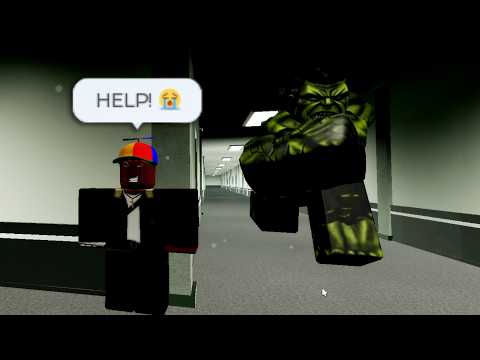 Community gameplayExplore the terrifying mechanics of Hulk abilities and learn what it takes to survive the Hulk when he enters his World Breaker state.YouTube
 The Physics of Gamma-Powered Destruction
When discussing the most formidable entities in comic book history, few names carry as much weight as the Jade Giant. To truly understand how to survive the Hulk, hulk abilities must be analyzed through the lens of physics, biology, and raw, unrestrained kinetic energy. Whether you are a fan of power-scaling debates or just interested in the science of superhero clashes, knowing exactly what makes the Hulk tick is the first step toward understanding his near-infinite potential.
The primary reason many struggle to survive the Hulk is that his physiology effectively ignores the conservation of energy. While most beings have a ceiling for their power output, the Hulk acts as a biological feedback loop where rage directly correlates to physical strength and mass. As his heart rate increases and his adrenal glands flood his system with gamma-irradiated neurotransmitters, he doesn't just get angry—he evolves.
Analyzing Hulk Abilities: A Breakdown
To survive the Hulk, you must first recognize the specific threats he poses. His abilities are not static; they scale based on the intensity of the conflict. Below is a breakdown of his primary capabilities as observed in high-stakes tactical scenarios.
| Ability | Mechanism | Threat Level |
|---|---|---|
| Gamma-Fueled Strength | Adrenal-gamma feedback loop | Catastrophic |
| Accelerated Mitosis | Instant cellular repair/adaptation | Extreme |
| Thunderclap | Atmospheric vacuum displacement | High |
| World Breaker State | Massive localized radiation emission | Planetary |
The Feedback Loop: Why He Gets Stronger
The core of the Hulk’s power is his ability to adapt to external stimuli. If you hit him with heat, his skin cells duplicate and harden, becoming more resistant to that specific temperature. If you try to restrain him, his muscles knit back together with greater density. This makes him a "storm" that cannot be de-escalated. Community reports often highlight that the more resistance the Hulk meets, the more his gamma output spikes, creating a cycle that can eventually lead to tectonic instability.
Tactical Considerations for Survival
If you are looking for ways to survive the Hulk, hulk abilities dictate that physical confrontation is rarely the answer. In scenarios where combat is unavoidable, tactical positioning becomes the only variable that matters. The following table illustrates why traditional brute force strategies fail against the Hulk.
| Strategy | Why it Fails | Resulting Outcome |
|---|---|---|
| Blunt Force | Hulk absorbs impact and gains mass | Increased durability |
| Heat/Energy Attacks | Accelerated mitosis adapts to heat | Hardened, charred skin |
| Restraint | Gamma radiation breaks bindings | Structural collapse |
| Atmospheric Combat | Hulk uses gravity and leverage | Kinetic stalemate |
The Importance of Environment
A key lesson from expert tactical analysis is the "verticality" of the battlefield. The Hulk requires leverage to exert his maximum force. When he is on solid ground, he can trigger seismic events that threaten entire regions. However, in low-orbit or vacuum environments, he loses his fulcrum. Without the ability to push against the Earth, his kinetic energy dissipates, allowing for a potential, albeit temporary, neutralization of his threat.
The World Breaker Threshold
The "World Breaker" state represents the pinnacle of current recorded Hulk abilities. At this stage, he stops absorbing ambient radiation and begins to emit it at a level that can ionize the atmosphere. During this phase, the Hulk is no longer just a brawler; he is a walking reactor meltdown.
For those analyzing the data, the transition from a standard threat to a World Breaker follows a predictable pattern:
- Initial Conflict: The Hulk takes damage and enters a state of heightened adrenaline.
- Physiological Shift: The skin color deepens (usually to a darker emerald or charred gray).
- Emission Phase: The subject begins to vent excess gamma radiation into the surrounding area.
- Environmental Impact: Surrounding matter begins to ignite or shatter due to the sheer density of the energy.
For more information on the official science behind these power levels, you can visit the Marvel Official Character Database to see how his stats have evolved over decades of publication history.
Comparative Power Dynamics
When evaluating how to survive the Hulk, it helps to compare him against other high-tier entities. The following table highlights the difference between raw power and tactical control.
| Combatant | Primary Advantage | Survival Strategy |
|---|---|---|
| Superman | Solar-powered flight/speed | Tactical relocation to orbit |
| Thor | Magical weaponry/lightning | Strategic containment |
| Hulk | Infinite rage/adaptive mass | De-escalation/Oxygen deprivation |
Why Control Matters More Than Power
As shown in many hypothetical encounters, raw power often hits a ceiling, but tactical intelligence does not. Even against an entity with infinite strength, the ability to control the environment—moving the fight from a populated city to a vacuum—is the only proven way to survive the Hulk. Without oxygen to fuel his metabolic processes, even a god-like entity eventually faces a reduction in output, leading to a temporary return to a dormant state.
Community Insights and Player Experience
According to various community reports and theoretical "vs" forums, the consensus is that the Hulk cannot be defeated by traditional means. Most players and fans note that the "win condition" is almost always about survival, not victory.
- Avoid the Thunderclap: Many users point out that the thunderclap is the most underrated of the Hulk abilities, capable of creating a vacuum that shatters momentum.
- Don't Fight on Tectonic Plates: If you have the ability to move the fight, do it immediately. The ground is a liability.
- Monitor Oxygen Levels: If you are forced into an orbital engagement, the Hulk’s need for oxygen is your greatest tactical asset.
Frequently Asked Questions
Q: Can you actually defeat the Hulk in a fight? A: Scientifically, the Hulk has no upper limit to his strength. Most tactical experts argue that you cannot defeat him, you can only survive the Hulk by controlling the environment and waiting for his rage feedback loop to break.
Q: What are the most dangerous Hulk abilities to watch out for? A: The most dangerous ability is his adaptive mitosis. This allows him to harden his skin and become resistant to whatever damage source you are using, making him progressively harder to hurt as the fight continues.
Q: Why does the Hulk get stronger the angrier he gets? A: It is a biological feedback loop. His adrenal glands pump gamma-irradiated neurotransmitters that cause his muscles to tear and knit back together instantly, increasing his mass and density with every surge of rage.
Q: Is it possible to survive the Hulk without leaving Earth? A: It is extremely difficult. Because the Hulk can trigger seismic events and manipulate his environment to gain leverage, staying on the ground usually results in the destruction of the surrounding area. Tactical relocation is highly recommended.
Related Guides
Can Anyone Survive The Hulk Thunder Clap? Analyzing the Power of Marvel's Green Goliath
Discover the destructive force behind the Hulk's iconic thunderclap and learn why it remains one of the most feared abilities in comic book history.
Can You Really Survive The Hulk? Understanding Hulk Stamina and Combat Limits
Does the Jade Giant ever run out of gas? We dive into the science of Hulk stamina to see if it's possible to survive The Hulk in a prolonged fight.
How to Survive The Hulk Punch Combos: Pro Strategies for Survive The Hulk Domination
Master the art of defense and learn how to survive The Hulk punch combos in Survive The Hulk with our essential guide to movement, blocking, and counters.
How to Survive The Hulk Sprint Attack: Pro Strategies for Roblox Survival
Master the art of evasion in Roblox Survive The Hulk. Learn how to survive the Hulk sprint attack and outsmart the beast with these expert tips.